The San Francisco Chronicle
- 4.0
- Rating
- 50.00K
- Installs
- Free
- Price

 Analysis by App-foxy
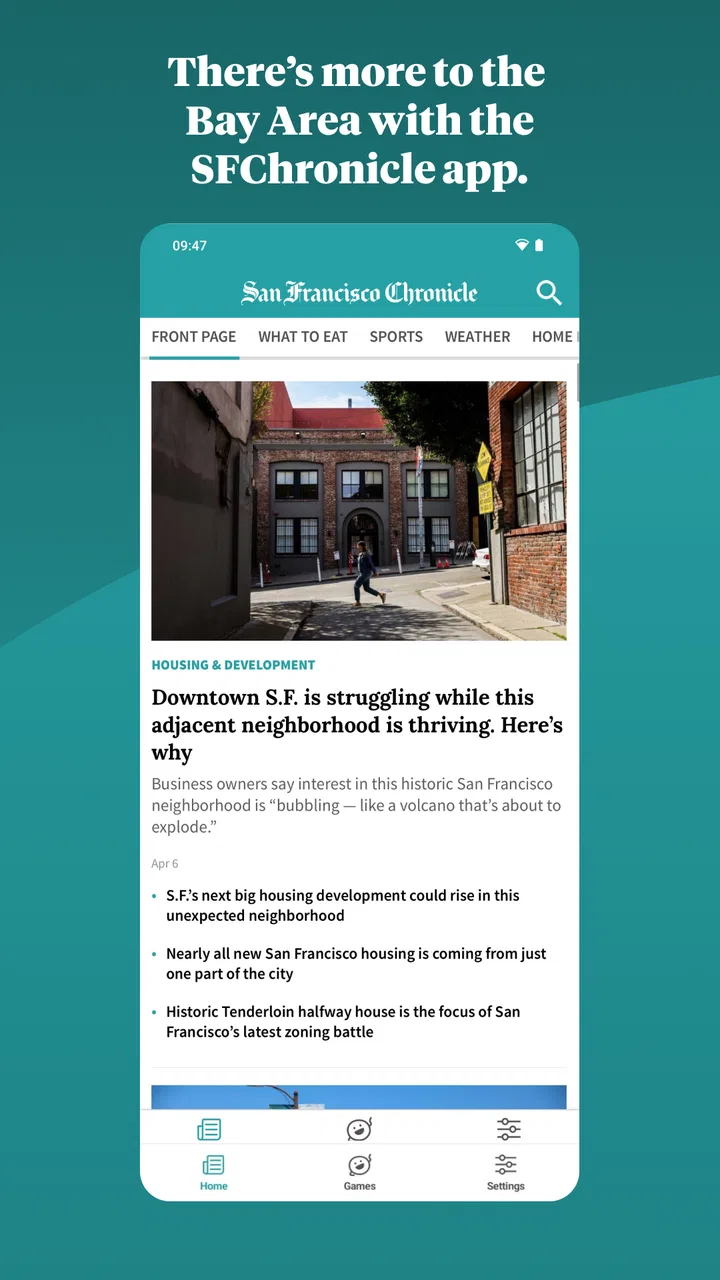
The San Francisco Chronicle is the kind of news app I open when I want Bay Area coverage in one place rather than a stream of disconnected headlines. It brings together local reporting, San Francisco sports, weather, alerts, puzzles, food coverage, and newspaper content, so it feels broader than a simple breaking-news reader. I found it most useful as a daily companion: something to check in the morning, revisit during a developing story, and browse more slowly when I have time for features or puzzles.
It is a free News & Magazines app from Hearst Newspapers - LLC, with an Everyone age rating. The app has been available since October 23, 2018, and its current version is 202608.28 for devices running Android 9 or later. Its average rating is 4.0 from around 1,700 ratings, while the wider review count is around 720. Those numbers suggest a generally positive experience, though not one that every reader will find perfect.
The main appeal is focus: this is built around San Francisco and the Bay Area, not around trying to be an all-purpose national news dashboard. If you live in the region, work there, follow its teams, or simply want a local perspective, that focus gives the app a clear reason to exist. If your priority is international news or a completely free headline feed, a different app may suit you better.
You May Also Like

 Blood Strike: 2.5 Anniversary
Blood Strike’s Loadouts Turn Every Drop Into a Tactical Gamble
A close look at Blood Strike’s custom loadouts: how fast access to signature weapons reshapes its battle royale rhythm, rewards preparation, and narrows the gap between fights.

 Pandora - Music & Podcasts
Pandora’s Music Is Easy to Start, but Harder to Recover
Pandora’s strength is its low-effort path from a seed to a station. Its weak spot is how much confidence it asks you to place in connection, setup, and quiet recovery.

 8 Ball Pool
 Is Built on Rivalries, Rematches, and Routine
A close look at the rivalries, rematches, shared routines, and unanswered safety questions that turn a quick pool match into a persistent mobile community.

 Samsung Music
’s Quiet Strength Is Playing What You Already Own
Its reach comes less from spectacle than from dependable access to a personal library. That simplicity is both the app’s strongest retention engine and its ceiling.

 AccuWeather: Weather Radar
AccuWeather Review: A Quick, Clear Forecast for Everyday Decisions
For everyday plans, the best forecast is the one you can understand quickly. AccuWeather makes rain timing, radar, and local conditions easy to act on, with a few trade-offs.

 Hill Climb Racing
Why Hill Climb Racing Still Turns Crashes Into One More Run
A tiny car, a bumpy hill and one more upgrade: Hill Climb Racing keeps resurfacing because its simple chaos makes every near-miss feel personal.
More From Our News Desk
View All News


How I use it as a daily Bay Area news routine
I use the app as a small, repeatable check-in rather than an endless scroll: first I decide what I need to know today, then I choose the section that answers it. That keeps a local-news routine useful even when I only have a few minutes, and it gives me a clearer sense of when I should move from quick updates to deeper reading.
Starting with the local picture
My most practical routine is to begin with the main news view instead of jumping straight into a single topic. That gives me a quick sense of what is happening across the area before I decide where to spend more time. Local news often makes more sense when several stories are viewed together: a city decision, a transportation issue, a weather change, or a community development can affect one another even when they appear under different subjects.
I then move toward the sections that match my day. On a workday, weather and alerts are more useful than a long feature. On a weekend, food coverage, puzzles, and newspaper material make the app feel less like an emergency bulletin and more like a publication to explore. This is one of the better qualities of the app: it supports both quick checking and slower reading without forcing every visit into the same pattern.
The sports coverage is also valuable for readers who follow San Francisco teams but do not want a separate app for every score, update, and piece of analysis. I would not treat it as a replacement for a dedicated live-score tool when every second matters, but it works well for keeping up with the local sports conversation alongside general news.
A realistic commute-day example
Imagine leaving home on a morning when the weather looks uncertain. I would first check the weather area, then look for alerts before reading the main local headlines. If something affects travel or public activity, that order is more useful than opening a long article immediately. Later, during a break, I might return to read the reporting behind the alert and then glance at sports or food coverage.
That sequence sounds simple, but it prevents a common problem with news apps: spending several minutes reading interesting material before checking the information that actually affects the next few hours. The Chronicle works well when I treat it as a small routine rather than a place to scroll aimlessly.
Using the newspaper side of the experience
The newspaper element gives the app a different rhythm from a typical headline aggregator. Aggregators are good at speed and variety, but they often flatten everything into the same visual priority. Here, I get a stronger sense of publication identity. I can move from immediate local updates to more considered reporting, then use puzzles or food content when I want something less urgent.
That variety is helpful for readers who still like the idea of a newspaper but prefer reading on a phone. It is less compelling for someone who only wants the shortest possible summary of current events. The app asks me to choose how deeply I want to engage, and that is a strength when I have time but can feel like extra browsing when I am in a hurry.
What the first setup deserves attention
After installing the app, I would not simply accept every default and forget about it. I would first identify which areas I genuinely expect to use: local news, weather, alerts, sports, food, puzzles, or the newspaper experience. The more sections I treat as equally important, the harder it becomes to maintain a useful reading habit.
I also recommend deciding whether alerts should be reserved for information that can change your plans. A phone becomes noisy when every update receives the same attention. The practical goal is not to receive the maximum number of notifications; it is to make the important ones easy to notice. If I am checking the app several times a day already, I can keep notifications more selective and use the app itself for routine reading.
Settings worth checking before regular use
The first setting I would review is notification behavior. Weather and urgent local alerts can be useful, while frequent general updates may interrupt work or rest. I prefer a setup where alerts support my routine instead of replacing it. This is especially important with a local publication, because regional news can be highly relevant but also highly specific to a particular moment.
Next, I would look at how the app presents content and whether the reading experience feels comfortable on my device. News apps are often used in short sessions, so text size, screen brightness, and the way articles open matter more than they seem. If reading feels tiring, I am less likely to explore the longer newspaper pieces that make the app worthwhile.
I would also keep an eye on account and subscription choices. The app itself is free to download, but in-app purchases range from $5.99 to $14.99 per item. That means I would read the wording around any paid option carefully before confirming it, especially if I only want occasional access rather than a continuing newspaper habit. The free entry point is convenient, but the most complete experience may involve a payment decision.
My advice is to decide what kind of reader you are before paying: occasional visitor, daily local-news reader, sports follower, or newspaper-style browser. A person who only wants a few headlines may not get enough value from a paid option. Someone who repeatedly returns for local reporting, puzzles, food, and the broader publication could find the purchase more reasonable.
Making the app easier to scan
Experienced use is mostly about reducing decisions. I would create a repeatable order for each visit: alerts first when planning the day, local news second, then one optional section. On quieter days, I might reverse that and begin with the newspaper or food content. The important part is having a pattern so I do not spend the entire session deciding what to open.
Another useful habit is separating “read now” from “remember later.” When an article raises a question about a local issue, I would avoid opening several unrelated stories immediately. I would finish the current piece, note the subject mentally, and return to it through the relevant section later. This keeps the app from becoming a chain of half-read pages.
For sports readers, a similar approach works: check the latest local sports material during a planned session, then return after a game or major development rather than repeatedly refreshing throughout the day. The app can support awareness without turning every update into a demand for attention.
Shortcuts that come from habits rather than hidden tools
I would not expect a special shortcut to solve every navigation problem. The fastest method is learning which part of the app answers each question. Weather is for immediate conditions, alerts are for notable developments, local news is for the wider civic picture, sports is for team-focused coverage, and food or puzzles are better saved for relaxed reading.
This sounds obvious, but it changes how quickly I find useful information. Instead of scanning every headline, I go directly to the section that matches my purpose. That is particularly helpful when I have only a minute before leaving home or when I want one local update during a work break.
A second habit is using the app at distinct times rather than keeping it open constantly. A morning check, an afternoon update, and an evening reading session are easier to manage than continuous browsing. The exact schedule will vary, but the principle is useful: give urgent information a place in the day and give longer articles a separate, calmer window.
Where this app is stronger than a general news aggregator
General aggregators offer breadth. They pull together national, international, business, technology, and entertainment stories from many publishers, which is useful when I want a wide overview. Their weakness is that local context can become just another item in a very large feed.
The San Francisco Chronicle takes the opposite approach. Its identity is tied to Bay Area reporting, San Francisco sports, local weather, alerts, food, puzzles, and newspaper reading. That concentration makes it easier for a regional reader to build a dependable routine. I am not constantly filtering out unrelated headlines to find the area-specific information I actually wanted.
The trade-off is obvious: readers outside the region may find the focus too narrow. Even someone who enjoys San Francisco coverage may still want a second app for national and international news. I see this app as a specialist source, not a universal replacement for every publication on my phone.
Where it differs from reading the website or print newspaper
A mobile app is more convenient than a physical newspaper when I am away from home, and it can bring alerts and changing weather information into the same place as articles. It is also easier to fit into small moments, such as waiting for an appointment or taking a short break.
At the same time, phone reading is more interruptible. Messages, calls, and other apps compete for attention, and a long article can feel less immersive than a dedicated newspaper-reading session. The app’s puzzles and food material help create variety, but they do not remove the basic limitation of reading on a small screen.
Compared with visiting a publication’s website in a browser, the app should feel more direct for repeat readers because it keeps the publication ready to open. The benefit is greatest when I already know I want this specific source. If I only visit once every few weeks, the browser may be sufficient and avoids adding another app to the device.
Practical limits and subscription friction
The most important limitation is that free installation does not mean every part of the experience is necessarily free. The in-app purchase range makes it clear that readers should pay attention when moving from casual browsing toward fuller access. I appreciate having a way to try the app before making that decision, but I would not subscribe automatically without first seeing whether my reading frequency justifies it.
Another limitation is the app’s regional focus. A strong local publication can still leave gaps if I need a complete national or global news briefing. I would skip this app as my only news source if my daily needs center on international markets, worldwide politics, or broad technology coverage.
I would also skip it if I dislike mixing urgent news with leisure content. The combination of alerts, reporting, sports, food, and puzzles is a benefit for many readers, but someone who wants a minimalist breaking-news tool may prefer a more narrowly designed application.
Who will get the most from it
I think the best match is a Bay Area resident who wants local reporting and practical regional information in a single place. It also suits former residents, frequent visitors, and sports followers who want to stay connected to San Francisco coverage. Food readers and people who enjoy newspaper puzzles may appreciate that the app is not limited to hard news.
It is less suitable for readers who never follow local stories, who want only free content, or who already have a trusted all-in-one news service that covers their needs. Installing another app only makes sense when the Chronicle’s regional perspective adds something missing from the current routine.
The Everyone rating makes it approachable for a broad audience, although the right reading habits still depend on the individual. Parents choosing news content for younger readers should remember that an age rating describes general suitability, not whether every article will match a child’s interests or maturity.
My verdict after building a repeatable routine
The San Francisco Chronicle works best when I use it deliberately: alerts for information that may affect the day, local news for context, sports for team updates, and food, puzzles, or newspaper content when I have time to browse. Its value comes from combining those Bay Area-focused areas without losing the feel of a recognizable local publication.
I would recommend it to anyone who wants San Francisco coverage to be a regular part of the day, especially if the alternatives feel too broad or impersonal. I would not recommend relying on it alone for every kind of news, and I would examine the in-app purchase options before treating the free download as a complete newspaper subscription.
With a few sensible habits, the app becomes more useful than its basic summary suggests. Checking the right section first, limiting interruptions, separating quick updates from longer reading, and deciding in advance whether paid access is worthwhile all make the experience smoother. For a local reader, that is enough to make this a practical and enjoyable news companion rather than just another headline feed.
FAQs for The San Francisco Chronicle
01What is The San Francisco Chronicle app?
The San Francisco Chronicle app is a digital news platform focused on the Bay Area, California, and major national and international stories. After exploring it, I found that it combines breaking news, local reporting, politics, business, sports, culture, food, and opinion content in one place. It is designed for readers who want Chronicle journalism on a phone or tablet rather than relying only on the newspaper’s website.
02Is The San Francisco Chronicle app free to download and use?
The app can generally be downloaded without paying an installation fee, but access to all articles and premium features may require a subscription. Free users may be able to read selected stories, newsletters, or limited content, while subscribers typically receive broader access. Before downloading, check the current App Store or Google Play listing and the subscription terms, since pricing, trial offers, and available features can change.
03What kind of news and features are available in the app?
The San Francisco Chronicle app offers more than breaking headlines. Its coverage commonly includes Bay Area news, California politics, crime, technology, business, sports, entertainment, restaurants, recipes, travel, and editorial analysis. Depending on the current version, readers may also find personalized feeds, saved articles, notifications, multimedia content, newsletters, and access to subscriber-only journalism. The strongest appeal is its detailed local reporting.
04Does the app require a subscription or account?
An account may be needed to unlock the full reading experience, especially for subscribers who want to access premium articles across multiple devices. The app may allow some visitors to browse limited free content without signing in, but registration is useful for managing a subscription, saving stories, receiving personalized recommendations, and syncing access. Review the subscription screen carefully before confirming any recurring payment.
05Is The San Francisco Chronicle app worth downloading?
The app is worth considering if you follow San Francisco, the Bay Area, or California closely and prefer in-depth local journalism over short news summaries. Its reporting, opinion pieces, food coverage, and regional focus make it particularly useful for residents and anyone connected to the area. However, readers seeking completely free access or broad global coverage may find the subscription limits less appealing.
Pros
- Reliable local reporting focused on the Bay Area.
- Strong coverage of politics
- business
- culture
- and sports.
- Investigative journalism offers valuable regional insight.
- Clean app layout makes articles easy to browse.
- Subscribers can access a broad digital newspaper archive.
Cons
- Many premium articles require a paid subscription.
- Some content may feel less relevant to readers outside California.
- Breaking-news alerts can be frequent for some users.
- The app may include occasional loading or syncing delays.
- Offline reading options may vary by article or device.

The San Francisco Chronicle
Gallery